
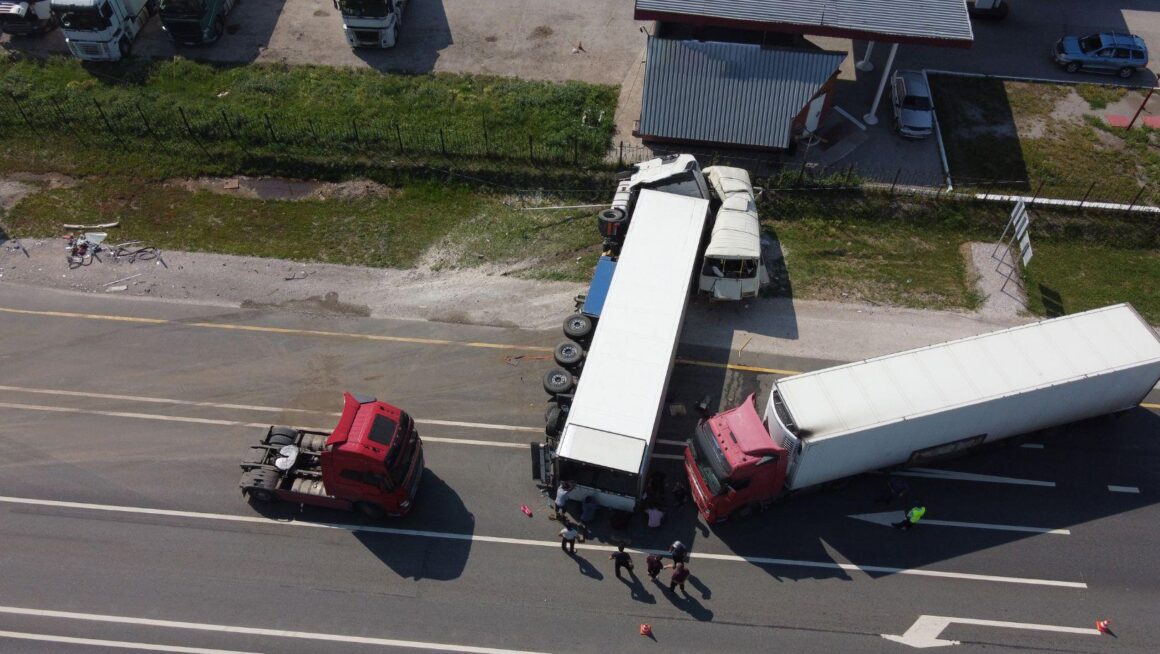
A collision with a commercial semi-truck or delivery van is a life-altering event that shatters a family’s sense of security in an instant. The sheer violence of these crashes leaves victims dealing with overwhelming physical trauma and unimaginable stress. This vulnerability is backed by grim statistics, showing that 70% of deaths in large-truck crashes are occupants of other vehicles. When a passenger car meets a commercial transport vehicle, the people inside the smaller car absorb almost all the devastating force.
Because the financial stakes in these crashes are incredibly high, trucking conglomerates act fast. They immediately deploy aggressive rapid-response teams to the crash scene to protect their bottom line. These corporate investigators are not there to find the truth or help your family. They are strictly focused on building a defense, minimizing liability, and sometimes even obscuring driver negligence before the wreckage is cleared from the highway.
Trucking companies understand that the first hours after a crash are the most critical window for building their defense. Families navigating this same period without guidance are at an immediate disadvantage. This resource on What to Do After a Truck Accident: In the First 24 Hours walks through the exact steps victims and families can take to protect their position before evidence is moved, altered, or lost.
The Physics of the Crash: Why Size and Weight Matter
The primary reason commercial truck accidents are so deadly comes down to basic physics. The massive size and weight disparity between an 18-wheeler and a standard sedan changes everything about how a crash unfolds. A fully loaded commercial truck can weigh up to 80,000 pounds, making it 20 to 30 times heavier than a standard passenger car. When an impact occurs, the heavier vehicle dictates the direction and force of the energy transfer.
Beyond pure weight, the physical design of commercial trucks introduces unique environmental hazards. The increased ground clearance of a semi-trailer frequently causes deadly underride accidents. In these horrific scenarios, a passenger vehicle slides entirely underneath the trailer, bypassing the car’s built-in crumple zones and airbags. This specific physical dynamic often results in fatal injuries for the occupants inside the smaller vehicle.
Speed and momentum also play a terrifying role in the severity of these crashes. Massive vehicles traveling at highway speeds simply cannot stop in time to avoid sudden obstacles. This lack of maneuverability leaves standard cars with nowhere to escape when traffic abruptly halts.
|
Vehicle Type |
Average Weight |
Highway Stopping Distance |
Unique Structural Hazards |
|
Passenger Car |
4,000 lbs |
Approx. 316 feet |
Low clearance; vulnerable to crushing |
|
Commercial Truck |
Up to 80,000 lbs |
Up to 525 feet |
High clearance; causes underride crashes |
As the table shows, a fully loaded tractor-trailer requires almost two football fields of distance to come to a complete stop. When commercial drivers are speeding or distracted, this massive stopping distance practically guarantees a violent collision.
Unpacking Catastrophic Injuries
The injuries sustained in a commercial truck crash rarely resemble the whiplash or minor fractures common in low-speed fender benders. Instead, victims often suffer catastrophic injuries that permanently change their physical capabilities and quality of life. Traumatic Brain Injuries (TBIs) are incredibly common, caused by the violent shaking and blunt force trauma of a heavy impact. A severe TBI can strip away a person’s cognitive function, memory, and ability to live independently.
Severe spinal cord damage is another horrifying reality of commercial vehicle crashes. The crushing weight of a semi-truck easily compromises the structural integrity of a passenger car cabin. This often leads to partial or total paralysis for the victims trapped inside. Families are suddenly forced to navigate a new world of wheelchair accessibility, home modifications, and specialized medical equipment.
These conditions demand lifelong medical care and intensive, specialized rehabilitation. The financial burden is staggering, often reaching millions of dollars over a victim’s lifetime. Standard auto insurance claims simply do not account for this massive, ongoing need. Families need comprehensive compensation just to keep their heads above water and ensure the victim receives proper, continuous medical support.
Industry Pressures: When Corporations Prioritize Profit Over Safety
It is easy to blame a fatigued or distracted truck driver for a crash, but the true cause usually goes much deeper. Modern industry pressures actively contribute to driver negligence on a massive scale. Nationwide trends show a terrifying rise in aggressive e-commerce delivery quotas and algorithmic deadlines. Drivers are treated like machines, tracked by GPS, and penalized if they fail to meet completely unrealistic delivery schedules.
This pressure cooker environment forces drivers into dangerous habits. They skip legally mandated rest breaks, speed through active work zones, and drive while completely exhausted. Corporations routinely prioritize profit margins over public safety. Some companies even ignore necessary fleet maintenance or disable speed limiters to save a few dollars, knowingly putting everyone on the road at risk.
This is where “The Killino Firm Difference” becomes essential for victims. A surface-level investigation only looks at what the driver did wrong in the final seconds before the crash. True justice requires looking beneath the surface of the tragedy to uncover the corporate root causes. By exposing the systemic pressures that caused the crash, victims can hold the actual decision-makers fully accountable for their dangerous business practices.
The Hidden Complexity of Liability
Determining fault in a standard car accident usually involves looking at two drivers and deciding who ran the red light. Liability in a commercial truck crash is vastly more complex. A single accident can involve a dizzying web of corporate entities spread across multiple states. This web can include the truck driver, the trucking company that hired them, the broker who arranged the load, and even the manufacturer of defective truck parts.
Holding these powerful entities accountable requires a deep mastery of complex Federal Motor Carrier Safety Administration (FMCSA) regulations and crash data. These federal rules strictly govern everything from driver hours of service to hazardous material transport and proper cargo tie-downs. Defense lawyers will exploit any lack of federal regulatory knowledge to shift the blame away from the trucking conglomerate and onto the victim.
Winning these high-stakes cases requires a highly specialized “Team Approach.”
- Accident Reconstructionists: Experts who use physics and skid mark analysis to prove exactly how the crash happened.
- Data Forensics: Technicians who download the truck’s “black box” (ECM) data to reveal the driver’s speed, braking, and steering inputs.
- Industry Specialists: Auditors who dig through corporate logbooks to find evidence of forged driving hours or skipped safety inspections.
Deploying this team immediately is the only way to secure the evidence before the trucking company’s rapid-response team “loses” or destroys it.
Leveling the Playing Field Against Corporate Giants
Taking on a multi-state trucking conglomerate is an incredibly expensive and legally challenging undertaking. Local, neighborhood personal injury lawyers often lack the massive financial resources and legal infrastructure needed to fight these battles. Corporate defense teams try to drag cases out for years, hoping to bankrupt a smaller law firm or force a desperate family into accepting a lowball settlement offer.
Hiring a firm with a national reach and a proven history of success changes the dynamic. You need advocates who have successfully forced systemic corporate safety changes through their litigation. When a trucking company knows your legal team has the funds to go to trial and win, they are forced to negotiate fairly.
Conclusion
Commercial truck accidents are fundamentally different from passenger car crashes in their physics, the severity of the resulting injuries, and their overwhelming legal complexity. The massive weight disparity turns simple collisions into catastrophic events, leaving victims with a lifetime of medical, physical, and financial hurdles. Meanwhile, the corporations responsible for the damage hide behind layers of contractors and highly paid defense attorneys.
Time is actively running out for victims and their families. Every hour that passes gives corporate defense teams another opportunity to bury the evidence and protect their bottom line. Taking immediate, decisive action in the hours following a crash is the only way to preserve vital crash scene data and secure your legal rights.
