

Planning a custom software project before hiring developers saves time and money. It also prevents the kind of slow, painful rework that derails roadmaps and frustrates stakeholders. Yet too many founders and tech leaders skip straight to vendor selection, treating planning as overhead rather than strategy.
Clarify Business Goals and Measurable Outcomes
Primary objectives typically fall into four classes: revenue growth, operational efficiency, compliance, and customer experience improvement. Secondary goals might include reducing support burden or enabling a future product line. Keep the list short. Setting too many goals creates conflicting priorities that lead teams in the wrong direction. This initial step is often part of the discovery phase, where the project idea is refined and aligned with business strategy.
Map Stakeholders, Users, and Roles Early
Custom software development succeeds when you identify who will use the system and who will approve decisions. Skipping this step creates security gaps, workflow confusion, and rework when access issues arise during development.
List all stakeholders: internal users like operations teams and sales reps, external users like customers and partners, compliance officers, and executive sponsors. Identifying user personas helps understand daily versus occasional users. Creating user stories clarifies desired user actions and system responses, which developers need from day one.
Prepare these artifacts before proceeding:
- Stakeholder list with contacts, roles, and decision authority
- User role matrix linking roles to permissions and system functions
- RACI chart defining who is Responsible, Accountable, Consulted, and Informed for key decisions
Document Current Processes and Pain Points
Before defining new features, you need a clear picture of the current workflow, including every spreadsheet, email chain, and legacy tool your team relies on. A workflow chart offers a high level view of project steps and reveals real bottlenecks.
Walk through one or two concrete workflows end to end. For an e-commerce company, trace the “quote to cash” process: how orders enter the system, who approves pricing, how fulfillment is triggered, and where reconciliation happens. For a clinic network, map “patient intake to discharge.” Capture every handoff, manual data entry, and duplicate data point. Mapping user journeys visualizes interactions and uncovers hidden problems.
Translate Business Needs Into a Practical Requirements Brief
Documenting technical and business requirements is essential for software development. Effective software project planning relies on a lightweight but practical brief that contains a problem statement, goals with measurable outcomes, user groups and roles, top workflows, must have and nice to have features, success metrics, known risks, and constraints like budget or compliance. Distinguishing between must haves and nice to haves defines the minimum viable product scope, which keeps the first phase focused.
Development briefs turn strategy into something custom software developers can estimate, challenge, and build. Without a written brief, vendors cannot price or schedule work reliably. As one vendor evaluation guide put it: “Without a clear written brief, we cannot determine what is in scope, what is not, and what the real risks are.”
Your final development brief document should contain:
- Problem statement (one paragraph)
- Business goals and key results
- User personas and role matrix
- Top five workflows with expected system behavior
- Prioritized feature list using labels: launch critical, important, future
- Non-functional requirements (performance, security, compliance)
- Wireframes or sketches for key screens
- Constraints, risks, and other relevant documents
Define Scope, Phases, and a Realistic Timeline
Many complex projects fail because the first release tries to do everything for everyone. Successful projects start with a clear and achievable scope, then expand deliberately.
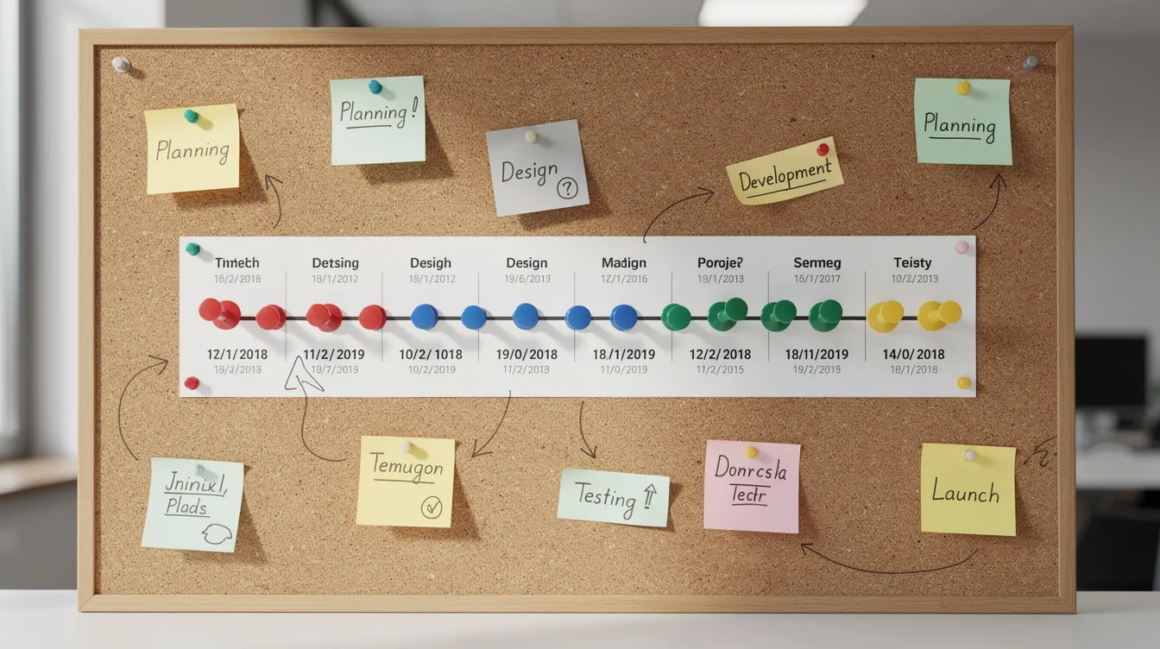
Use rolling wave planning: define near term work in detail while keeping later phases broad and flexible. Lock initial scope in writing. Treat new ideas as backlog items with formal approval before they enter the current phase. As Harvard Business Review has noted, the value of IT investments depends far more on management discipline than on technology itself.
Recommended phasing structure:
- First phase: core workflows, essential integrations, compliance baseline
- Second phase: reporting, advanced user roles, secondary integrations
- Third phase: analytics, automation, expansion to new markets
- Decision checkpoints: end of Discovery, end of Design, midpoint of Development, pre-launch review
Set Budget Guardrails and Engagement Constraints
Vendors can only propose sensible architectures and team compositions when they understand the financial and time constraints. Define a budget range for the first release and a two to three year roadmap, even if approximate. Establishing a budget and timeline includes resource allocation and contingency, not just a top line figure.
Express what is fixed and what is flexible. A fixed launch date with flexible scope works when timing matters. A fixed scope with flexible date works when feature completeness is critical. Trying to fix both leads to failure. Industry standard budget overruns are four to eight percent, manageable with proper guardrails. Large projects lacking governance often exceed forty percent over budget.
Evaluate and Shortlist Vendors Based on Evidence, Not Hype
Once your planning artifacts exist, you are ready to choose a software development partner based on fit with the project rather than on vague claims. This is where evidence matters more than a polished sales pitch.
Evaluate past work for similar projects before hiring. Review vendor case studies and references for projects similar in scale, complexity, and industry. Look for specific outcomes: did they hit launch dates? Did the solution produce measurable impact? Ask for client references you can actually call, not just testimonials on a website. As TechCrunch has reported, the gap between vendor promises and delivery outcomes remains one of the top frustrations for enterprise buyers.
Ask about the development partner’s project management style. A proven methodology ensures timely, budget-friendly delivery. Look for discovery workshops, sprint planning, demo cadence, and client involvement in decisions. Confirm how the vendor handles QA, code review, and user acceptance testing.
Demand cost and process transparency: clear rate cards, sample estimates, assumptions, and pricing for change requests. Discuss post-launch maintenance and support: service levels, incident response, and enhancement options. Ensure these commitments are in writing.
From Idea to Executable Software Roadmap
Careful preparation before engaging custom software development teams greatly improves the chances of on-time, on-budget delivery. Every hour spent planning saves many hours of rework, scope disputes, and compliance issues.
- Define outcomes linked to business metrics, not just feature wish lists
- Understand users, processes, and pain points before coding
- Create a clear development brief vendors can estimate and challenge
- Set honest budget and constraints, including contingency
- Evaluate vendors based on past work, not sales pitches
Treat planning as an investment that accelerates all following phases, not as a delay. SoftDoes offers IT consulting at the planning stage and implementation services for enterprises and scale-ups with a solid brief. The difference between success and costly rewrites usually starts before hiring the first developer.
